
Master & Group Classes
Master Classes
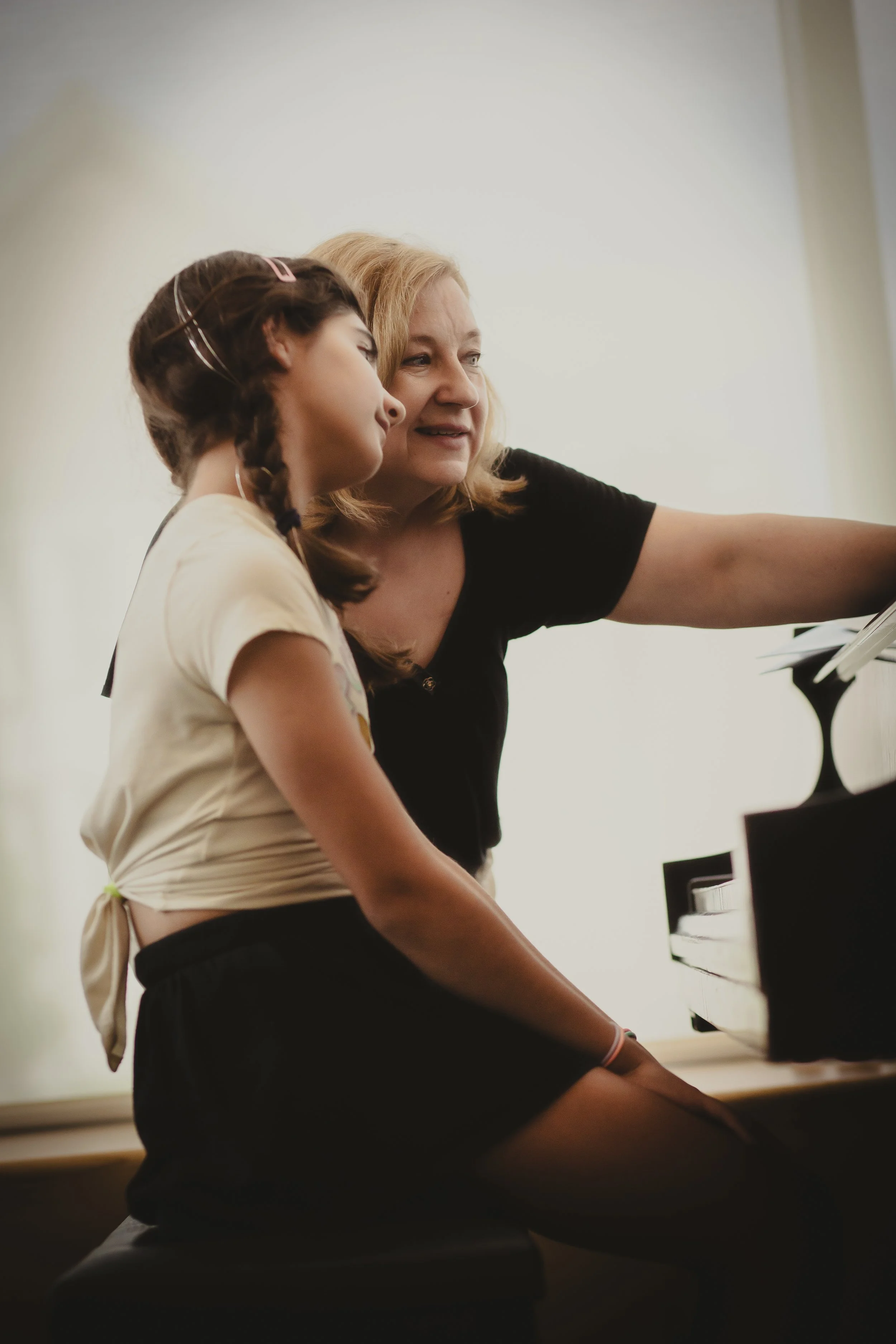
In the Budding Artist program, students participate in master classes designed for shared learning experiences. Each class consists of four students for Budding Artists, three for Young Artists, and two for Rising Artists. While one child receives individual attention, the others observe and learn from the experience. Parents are encouraged to attend and take notes to manage their child's practice time outside of class effectively. The primary focus of the master class lessons at NESI is to enhance one or two specific technical or musical aspects presented by the student during the first lesson. Students are expected to use a polished repertoire and will not be learning new music in these classes. Please consult with your home teacher to select an appropriate polished piece. You can find more information about the master class experience at NESI below.
Group Classes
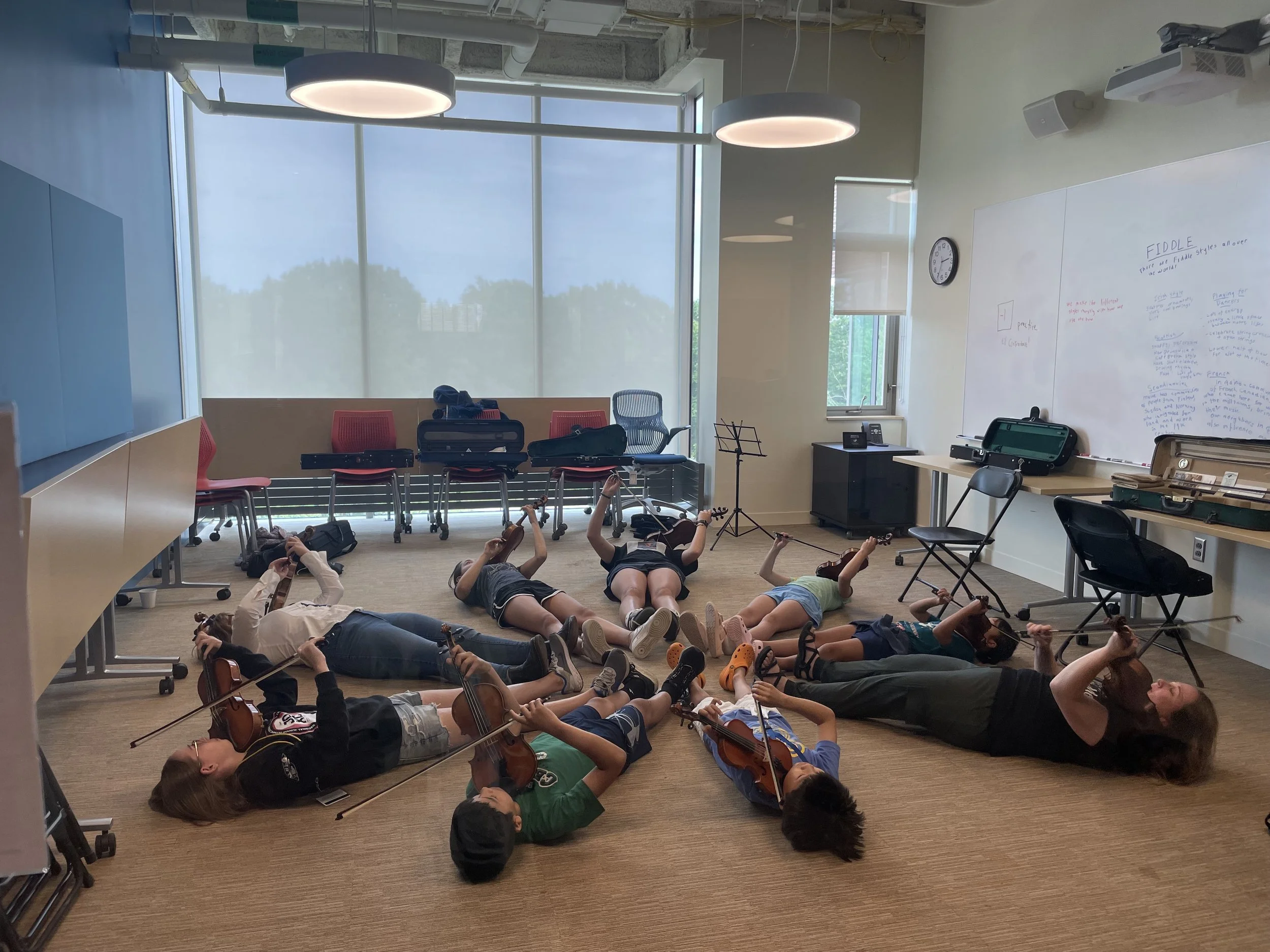
Group classes are organized by book level, where students develop their musical and ensemble skills while playing their shared repertoire together.
Masterclasses & the Spirit of NESI
By Wendy Sawicki
I recently had a conversation with Yasmin about what makes NESI so special. My first reaction was, "It is the spirit." This conversation has caused me to reflect on what the NESI spirit really is.
My first experience with NESI was at Bates College in 2003 with my daughter, Megan. At the time, she was 6 years old and at the end of her second year of learning how to play the violin. We attended as commuters, without any idea of what to expect. First on her schedule was a masterclass with Betsy Kobayashi. I had no idea what to anticipate when we entered that tiny room filled with three other girls and their moms or dads. Megan stood up in front of Betsy, and I was amazed at how brave she was to find the notes of "Go Tell Aunt Rhody" in front of seven complete strangers.
Fast forward to the end of the masterclass as we walked out of the room. I was approached by another mom, who said to me, "When your daughter played that song, it brought tears to my eyes." I thought, "Um, okay…" After some reflection that day, it dawned on me that this was a compliment; Megan's music had made an impression on another person. I discovered that week that there is a special spirit among these Suzuki families. I couldn't recall being gathered in a setting with so many other families where such kindness was paired with so much hard work. I was hooked.
Dr. Suzuki is known for many inspirational quotes. One of my favorites sums up the spirit I felt at our first institute: "Teaching music is not my main purpose. I want to make good citizens. If children hear fine music from the day of their birth and learn to play it, they develop sensitivity, discipline, and endurance. They get a beautiful heart." I could see this in action at NESI.
The concept of the whole masterclass was fascinating to me. While my first thought was, "I wonder how much benefit a young child could gain from a 15-minute lesson," my observations and conversations with teachers and other parents quickly created a clear picture of the benefits.
Betsy Kobayashi shared that when a participating child is listening but not in the spotlight, they are relaxed and can observe. They realize that they are not the only ones working on similar things. Even at the advanced level, some students would attend a masterclass to observe without taking a lesson. They can learn so much through these observations. Betsy studied with Dr. Suzuki, and she shared that in Matsumoto, Japan, most classes were masterclass-style. There would be six children with one violin, observing, participating, and learning both individually and from each other. The class could be three hours long, with young children taking needed breaks.
Aimee Morrill Briant mentioned that parents can take notes for all the kids' lessons for their own use. By observing other students' lessons, both parent and child can go home with many practice points beyond those specific to their own child. Returning home with a huge arsenal of practice tools after an institute can reinvigorate practice long after the institute is over.
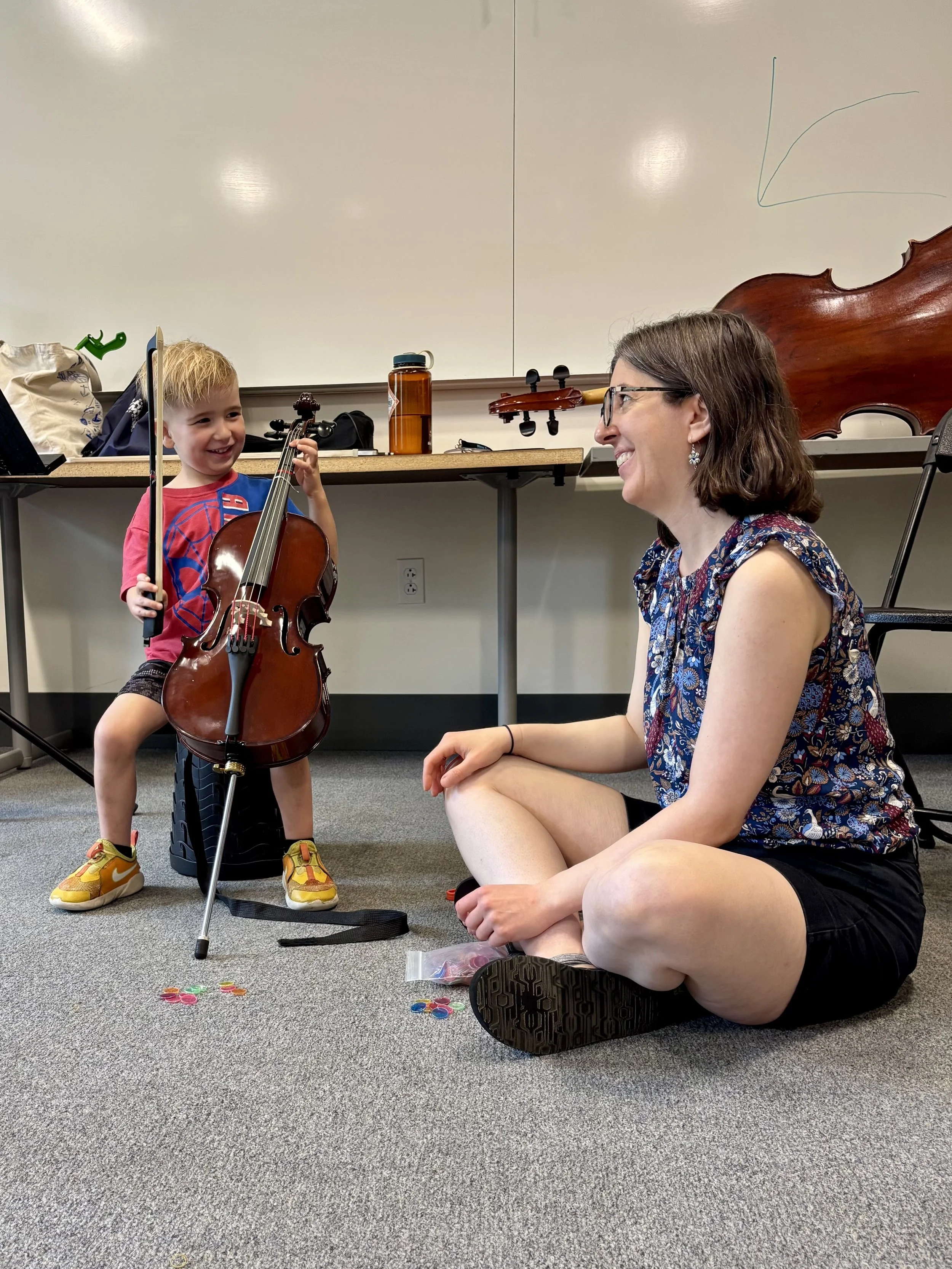
Clorinda Noyes shared that parents, as observers and hopefully note-takers, can see where the common struggles are, where breakthroughs occur, and observe the process of learning as it happens between another student and teacher. They gain respect for the way their own child processes the experience, which can foster compassion and understanding during those challenging moments of home practice. She also shared that, as a teacher, she has noticed her students returning from Institute weeks later, able to pick up new songs much more quickly after experiencing them in class alongside others.
As I reflect on my own experience with many masterclasses, I realize how much I have gained as a parent. I do not feel alone during periods of frustration. I have a supportive network and camaraderie around me. My children have formed friendships, and, in some years, this is enough inspiration to stop the feeling of wanting to throw in the towel. I have utilized techniques, ideas, and approaches that I observed teachers use with others (not to mention those specifically for my children) to spice up our practice. It's heartwarming to watch my kids find their own motivation when another student is working on the "next" song. They would spend many hours during that week with that student, collaboratively figuring out how to play that song.
Returning to Megan, three years after her first NESI experience in Betsy's masterclass, she again had the pleasure of working with Betsy in another masterclass. A couple of students in that class were fine-tuning the art of vibrato. Megan was ready to learn but had not yet taken that leap. After observing for two days, she asked Betsy to give her an exercise to help her learn. Megan added that exercise to the ones she saw the other students doing, and it clicked. She left NESI with a beautiful vibrato and a whole lot of confidence and pride.